Login
Login
Gua Sha and the Return of the Facial Ritual
Facial tools have had an unusually bumpy path through Australian wellness culture with a genuine boom several years ago, a subsequent backlash dismissing them as gimmicky Instagram props, and now a quieter, more grounded return in 2026 that looks considerably less breathless than the first wave. The key difference this time is expectation: almost nobody is claiming a jade roller will reshape a jawline. What's driving renewed interest is something more modest and, arguably, more honest: the ritual itself.
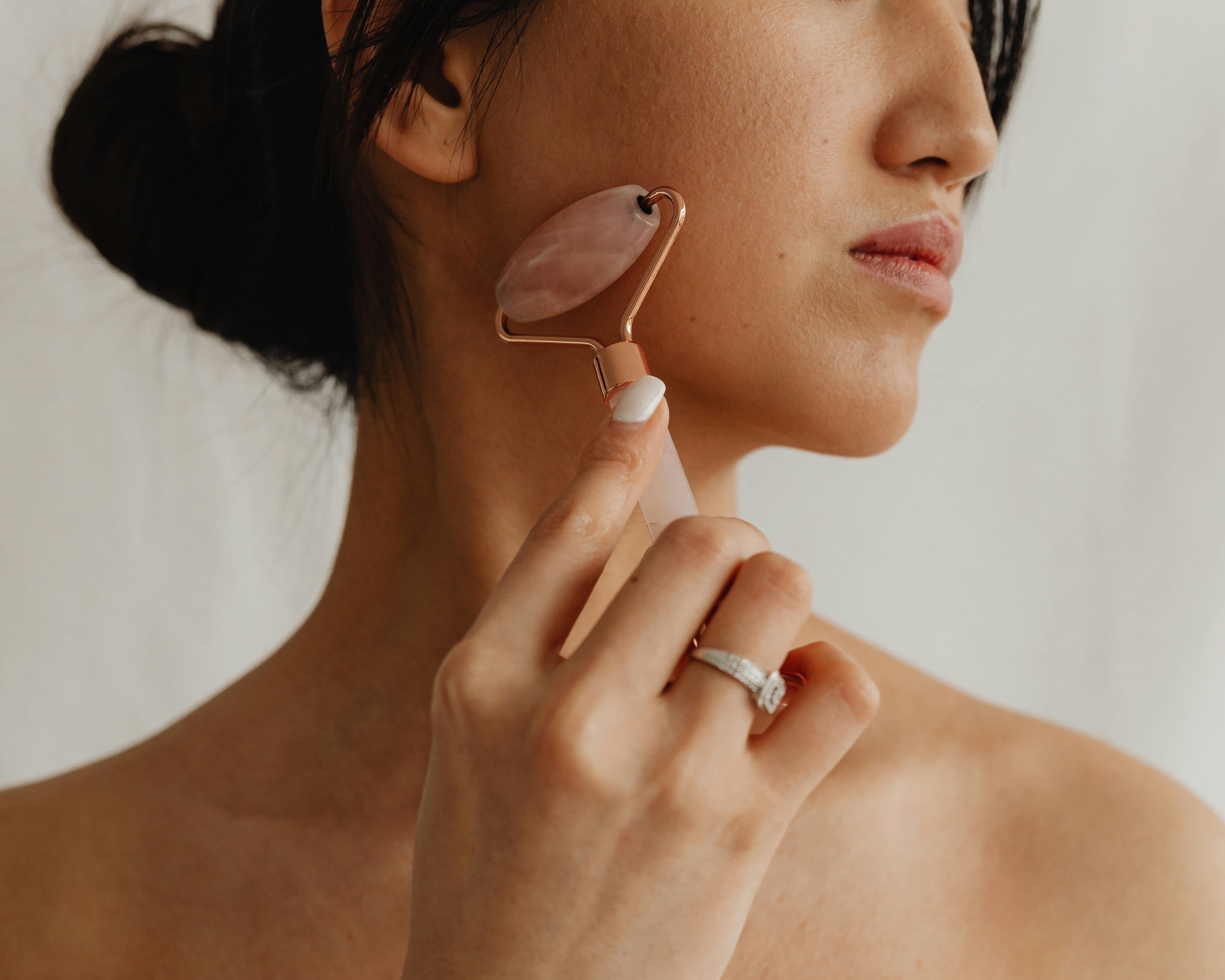
Cooling facial tools in particular have found solid footing this year, arriving alongside a broader shift in skincare priorities away from aggressive actives and toward calming, barrier-supportive approaches. Where a few years of skincare culture centred on retinol concentrations and exfoliation frequency, the current mood favours de-puffing, soothing, and slowing down where a chilled jade or quartz roller does something a serum simply can't replicate: it introduces genuine, physical slowness into a routine that might otherwise take thirty seconds.
Gua sha, the traditional Chinese practice from which many of these modern rollers and flat stone tools derive, has a documented history stretching back centuries, originally used within traditional medicine frameworks to address muscle tension and promote circulation. Its contemporary Western adaptation strips away most of that context, repositioning the tool primarily as a skincare and de-puffing device with a simplification that traditional medicine practitioners have at times pushed back on, even as the tools themselves have found broad mainstream acceptance.
It's worth being direct about where the evidence currently sits. Claims around lymphatic drainage and detoxification via facial rolling are, at this point, more rooted in traditional and anecdotal use than in robust clinical research but there is limited peer-reviewed evidence establishing that surface-level rolling meaningfully affects lymphatic flow. What is better supported is the more modest, immediate effect: the cooling sensation of chilled stone against skin does produce short-term vasoconstriction, which can visibly reduce puffiness for a period, similar to how a cold compress works.
What seems to be sustaining the trend, more than any specific physiological claim, is the ritual value itself. In a wellness culture increasingly focused on mindful, unhurried practices, a facial tool used slowly and carefully following a consistent pattern along the jaw and under the eyes which offers something genuinely tactile and repetitive in a way that applying a serum with fingertips doesn't quite provide. It functions less as an active treatment and more as a structured moment of stillness, not unlike how a proper cup of tea is valued as much for the pause it creates as for anything in the cup.
The category's staying power in 2026, then, seems to rest on Australians becoming more comfortable holding two things at once: enjoying and continuing a ritual for how it feels, without needing it to be backed by hard clinical proof to justify its place in a routine. That's a more mature relationship with wellness tools than the hype cycle of a few years ago allowed for, and it's likely part of why this second wave feels more durable than the first.