Login
Login


Corporate Gift Budget Planning for 2026: A Strategic Guide
Table of Contents
- Why Corporate Gift Budget Planning Matters More in 2026
- Budget Allocation Strategies for Corporate Gifting
- ATO Fringe Benefits Tax Corporate Gifts: What You Need to Know
- Building a Corporate Gifting Strategy 2026 Calendar
- Employee Wellness Gift Ideas That Fit Your Budget
- Corporate Gifting Policy Template: A Step-by-Step Framework
- Measuring ROI and the Strategic Value of Gifting
- Frequently Asked Questions
Last Updated: September 10, 2026
Why Corporate Gift Budget Planning Matters More in 2026
Corporate gift budget planning for 2026 is the practice of allocating a defined annual spend to client and employee gifts, then tracking cost-per-unit, tax treatment and delivery logistics against that plan. Get it right and gifting becomes a measurable retention tool. Get it wrong and you're funding a warehouse of branded mugs nobody asked for.
This guide pulls together the budget formulas, ATO obligations and vendor checks that procurement teams actually need.
Three forces are pushing gifting budgets under proper scrutiny. Finance teams now want a defensible cost-per-recipient figure. The Australian Taxation Office applies fringe benefits tax rules to many gifts above a threshold, which we cover below. And recipients have become noticeably harder to impress with generic merchandise.
That last point matters most. A gift that feels curated gets remembered; a gift that feels bulk-ordered gets re-gifted. Below, we'll show you exactly how to build a budget that produces the first outcome, including allocation formulas, a policy template and a vendor vetting checklist.
Budget Allocation Strategies for Corporate Gifting
Start with a total figure, then split it by recipient tier rather than by product category. Most teams do this backwards, choosing hampers first and discovering the budget doesn't stretch.
A workable split looks like this:
- Tier 1 (top clients, key accounts): 50-60% of total budget
- Tier 2 (regular clients, long-tenured staff): 25-30%
- Tier 3 (broad list, seasonal touchpoints): 15-20%

Setting Your Cost-Per-Unit Benchmarks
Cost-per-unit is your budget divided by recipient count, adjusted for tier. If your total gifting budget is set and your list runs to 200 recipients, the maths is unforgiving: every dollar of overspend on tier one comes directly out of tier three.
A common approach is to set a ceiling per tier and work backwards to products. This protects the broad-reach tier, which is usually where brand visibility is won.
Gift Categories by Price Tier
Tier |
Typical Recipient |
Gift Character |
Budget Share |
|---|---|---|---|
Tier 1 |
Key accounts, executives |
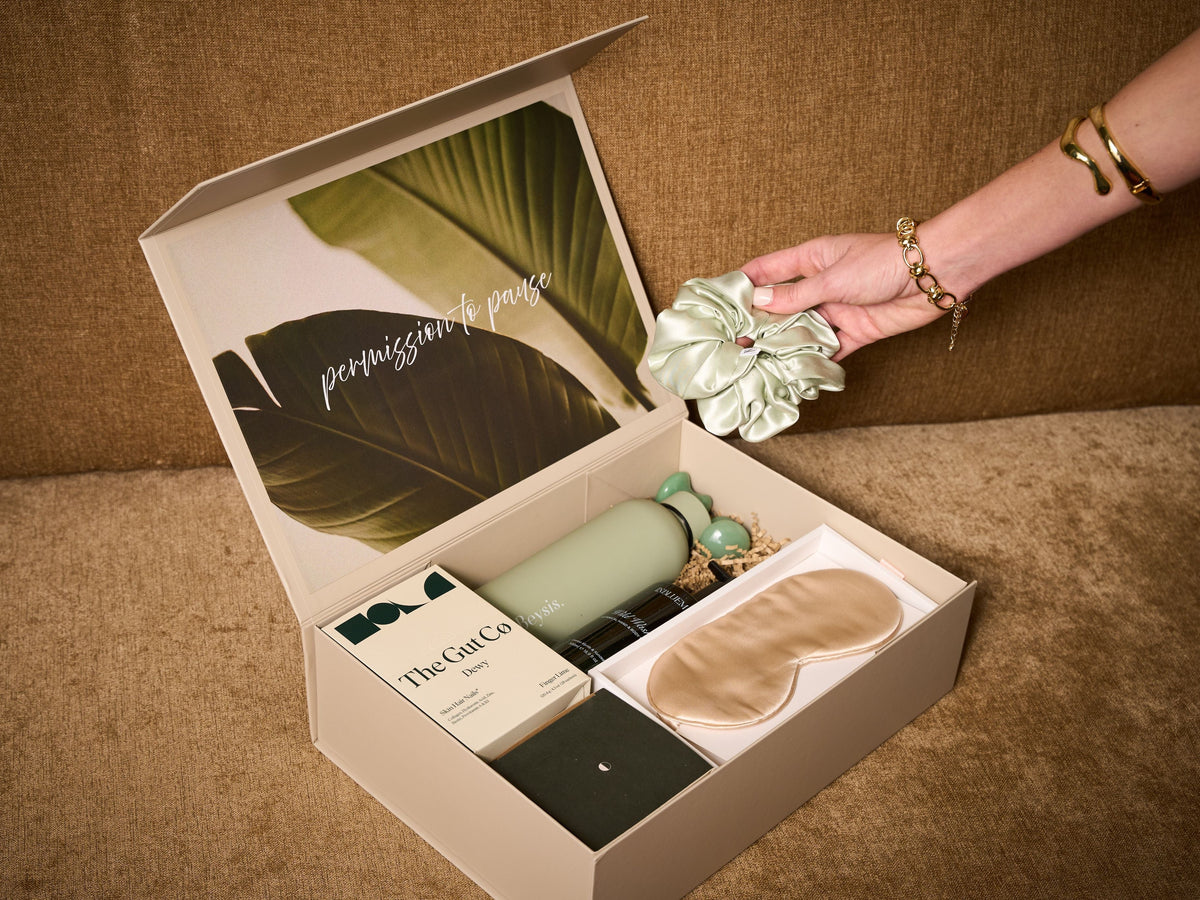
Curated wellness hamper $200+ |
50-60% |
Tier 2 |
Regular clients, long-tenured staff |
Quality shared gift $100-200 |
25-30% |
Tier 3 |
Broad list, seasonal contact |
Petite hamper under $100 |
15-20% |
ATO Fringe Benefits Tax Corporate Gifts: What You Need to Know
Fringe benefits tax (FBT) is a tax employers pay on benefits provided to employees in respect of their employment. Gifts can fall inside its scope, and the way you structure them determines whether they attract FBT at all. The ATO publishes current rates, thresholds and exemption conditions, and those figures are indexed and change, so check the ATO fringe benefits tax guidance before you finalise your budget rather than carrying forward last year's assumptions.
The mechanics that matter for budget planning:
- The minor benefits exemption. A benefit that is both infrequent and irregular, and below the minor benefits threshold, can be exempt from FBT. The threshold is indexed, so confirm the current figure (ato.gov.au). The two tests are cumulative: a gift can be low in value and still fail the exemption if it is provided regularly.
- The $300 rule of thumb. Many practitioners work to a per-gift value ceiling of around $300 when applying the minor benefits exemption, but the threshold is not the only condition, infrequency and irregularity must also hold (ato.gov.au). Treat the figure as a planning guardrail, not a legal safe harbour.
- The otherwise deductible rule. Where a gift would have been an allowable income tax deduction for the employee had they paid for it themselves, the taxable value can be reduced. This rarely applies to discretionary gifts, but it is worth raising with your accountant for anything business-related in character.
- Employee versus client gifts. Gifts to clients, suppliers and other non-employees generally sit outside FBT because they are not provided in respect of employment. They may instead raise deductibility and entertainment questions. Do not assume the same treatment applies across both recipient groups.
- The 50/50 split for mixed lists. If your recipient list mixes employees and non-employees, split it before you budget. Applying one FBT assumption to the whole list is where most forecasting errors originate.
Budgeting the FBT Line
A common pattern is to model FBT as a percentage uplift on the employee-gift portion of the budget, then reconcile against actuals. The steps:
- Segment your recipient list into employees and non-employees.
- For the employee segment, identify which gifts are likely to fall within an exemption and which will not.
- Apply the current FBT rate to the non-exempt portion, and add that figure as a separate budget line, not buried inside the gift cost.
- Reserve the contingency for the gifts you cannot classify until the invoice arrives.
Record-Keeping That Survives an Audit
FBT substantiation is not optional. For every gift, log the recipient, their employment status, the gift description, the cost, the date, and the exemption category you are relying on. Itemised supplier invoicing makes this straightforward; a single consolidated invoice for a bulk order does not. Ask your vendor for line-item detail before you commit.
Talk to your accountant about your specific circumstances. The rules depend on your entity structure, whether you are a small business for FBT purposes, and the nature of each gift. The framework above is a planning tool, not tax advice.
Building a Corporate Gifting Strategy 2026 Calendar
A corporate gifting strategy 2026 calendar maps every gifting moment to a budget line and a lead time. Without it, year-end spend absorbs the entire budget and the rest of the year runs on nothing.
Build the calendar in this order:
- Map fixed dates. Year-end, Lunar New Year, company anniversary, major client milestones.
- Add relationship dates. Staff birthdays, work anniversaries, parental leave, illness or bereavement.
- Assign each date a tier and a budget line.
- Set lead times. Bulk ordering and custom branding add weeks; confirm these with your vendor early.
- Reserve 10% contingency for ad-hoc gestures.
Procurement teams that plan on a calendar rather than a single year-end push typically report fewer rushed decisions and better recipient outcomes.
Employee Wellness Gift Ideas That Fit Your Budget
Employee wellness gift ideas work best when they're consumable, useful and genuinely restorative. A wellness hamper suits this brief because it doesn't sit on a desk gathering dust.
Options that hold up across budget tiers:
- Alcohol-free, refined-sugar-free hampers for inclusive gifting
- Self-care sets built around a ritual: bath, tea, skincare
- Australian-made health and beauty products with clear ingredient sourcing
- Personalised hampers for milestone recognition
For employee-engagement purposes, the gift's perceived thoughtfulness matters more than its price point. A well-chosen $80 hamper outperforms a $200 generic electronics gift that duplicates what the recipient already owns.
If you're buying at volume, ask your supplier directly about bulk pricing and per-unit rates. Bulk enquiries are handled case by case, since pricing depends on quantity, hamper selection and delivery requirements. Request a quote rather than assuming a standard rate.
Corporate Gifting Policy Template: A Step-by-Step Framework
A corporate gifting policy template removes the guesswork and gives approvers a defensible rule set. Here's a framework you can adapt.
1. Purpose and scope. State what gifting is for: client retention, employee recognition, milestone marking.
2. Eligibility. Define who receives gifts and at what tier.
3. Budget authority. Who approves spend at each tier, and what triggers escalation.
4. Tax and compliance. Confirm your FBT position with your accountant and document it.
5. Recipient segmentation. Group recipients by relationship value, not job title alone.
6. Personalisation rules. Note dietary, cultural and allergy considerations. Alcohol-free options remove an entire category of risk.
7. Delivery and logistics. Nominate delivery windows, addresses and who handles failed deliveries.
8. Record-keeping. Log recipient, gift, cost and date for every item.
Vendor Vetting Checklist
Before committing budget, run every supplier through this:
- Can they confirm Australian sourcing and ingredient transparency?
- Do they handle bulk orders with consistent per-unit quality?
- What are their lead times for custom branding and bulk fulfilment?
- Is delivery tracked, and what happens if a hamper arrives damaged?
- Can they accommodate dietary, allergy or alcohol-free requirements?
- Do they provide itemised invoicing suitable for your FBT records?
- What is their replacement policy for damaged or incorrect orders?
That last point is worth dwelling on. A supplier without a clear replacement policy leaves you absorbing the cost of a gift that never arrived intact.
Measuring ROI and the Strategic Value of Gifting
Gift ROI is measured in retention and sentiment, not in direct revenue attribution. That makes it harder to prove, not impossible, and it is the gap most gifting guides leave open. They stop at 'track your results' without explaining what to track, where to store it, or how to connect it to the systems you already run.
The Integration Layer Most Teams Skip
Manual spreadsheets break the moment your recipient list changes. The fix is to treat gifting as a data workflow, not a one-off campaign.
- CRM integration (client gifts). Tag gifted accounts in your CRM with the gift type, tier, date and cost. That lets you correlate gifting against renewal dates, expansion conversations and account health scores. Most CRMs support custom fields or a lightweight object for this; the point is that the gift record lives next to the relationship record, not in a separate file.
- HRIS integration (employee gifts). Pull tenure milestones, work anniversaries and start dates from your HRIS so gifting triggers automatically rather than relying on a manager to remember. This is where most employee-gifting programmes quietly fail.
- Procurement and finance systems. Push itemised gift costs and FBT treatment into your accounts payable workflow so the budget line reconciles without manual re-entry.
You do not need bespoke software to start. A shared recipient register with consistent fields, recipient, segment, tier, gift, cost, date, response, is enough to make the data usable. The integration question is about where that register lives and who owns it.
Measuring Qualitative Impact, Not Just Response Rates
Response rate tells you a gift arrived. It does not tell you whether it landed. Sentiment analysis closes that gap.
A workable approach for a procurement or people team:
- Capture the raw signal. Thank-you emails, chat messages, survey comments and social mentions are all usable. Keep them in one place.
- Categorise manually at low volume. For lists under a few hundred recipients, a simple positive / neutral / no-response tag applied by one person is more reliable than an automated tool.
- Move to sentiment tooling at scale. Once volume justifies it, text-analysis features in your CRM or a dedicated sentiment tool can classify responses consistently. Treat the output as directional, not precise.
- Watch for the re-gift signal. A gift that is re-gifted or left unopened is a negative signal even when the recipient says thank you. Follow-up conversations with account managers surface this faster than any dashboard.
A Practical ROI Frame
Direct revenue attribution is usually not defensible. What is defensible:
- Client retention rate across gifted versus non-gifted accounts, tracked over at least two cycles.
- Renewal timing, do gifted accounts renew earlier or with less negotiation?
- Sentiment trend across gifting cycles, not a single snapshot.
- Repeat gifting requests from the same account managers, which signal internal confidence in the channel.
Start with the register, connect it to one system, and add sentiment tagging before you scale the spend. The measurement infrastructure is cheaper to build than the budget is to defend without it.
Frequently Asked Questions
How much should a business budget for corporate gifts in 2026?
There is no single figure, but a common approach is to allocate a percentage of your annual marketing or client retention budget. For client gifts, some businesses set aside 1-2% of annual revenue per client. For employee gifts, a per-head amount is often used. The right number depends on your goals, recipient count, and whether gifts are tax-deductible. Review your corporate gift budget against past spending and adjust for inflation and growth.
What are the tax implications of corporate gifting under ATO guidelines?
The ATO treats most corporate gifts as either fringe benefits or deductible business expenses, depending on value, frequency, and recipient. Gifts under $300 (including GST) to employees may be exempt from fringe benefits tax if they are minor and infrequent. Client gifts are generally tax-deductible if they are made for business purposes and do not exceed $300 per recipient. Always keep records and check current ATO rulings, as thresholds and rules can change.
How do I balance wellness-focused gifting with a limited corporate budget?
Focus on quality over quantity. A single well-chosen wellness gift, such as a curated hamper with Australian-made skincare or relaxation items, often creates more impact than several inexpensive items. Set a clear cost-per-unit limit, negotiate bulk pricing with suppliers, and consider tiered gifting where top clients or long-serving employees receive a more premium option. This keeps your corporate gift budget aligned with your strategic gifting goals.
How can I measure the ROI of corporate gifting programs?
Track both quantitative and qualitative signals. Quantitatively, monitor client retention rates, repeat business, and referral rates before and after gifting campaigns. For employees, look at engagement survey scores and retention. Qualitatively, send a short thank-you follow-up or include a feedback card. Some businesses use sentiment analysis on email replies or social media mentions. While direct attribution is difficult, consistent tracking over 12-18 months reveals patterns that justify your corporate gift budget.