Login
Login
How to Create a Relaxation Hamper: A 2026 Guide
Table of Contents
- What You'll Need Before You Start
- Step 1: Choose a Theme and Pick Your Container
- Step 2: Gather DIY Self-Care Gift Basket Ideas
- Step 3: Source the Best Australian-Sourced Relaxation Gifts
- Step 4: Learn How to Style a Gift Hamper
- Step 5: Personalise and Package for Delivery
- Common Mistakes to Avoid When Building a Relaxation Hamper
- Frequently Asked Questions
Last Updated: September 10, 2026
What You'll Need Before You Start
Building a relaxation hamper that someone actually uses, rather than admires once and shelves, comes down to preparation. This guide walks through the full process, from choosing a container to packaging for delivery.
Before you buy a single item, gather these basics:
- A container: woven basket, wooden tray, lidded box or fabric tote
- Filler material: shredded paper, tissue, wood wool or fabric offcuts
- Ribbon or twine: for finishing the handle or lid
- A theme: one clear idea that ties every item together
- A budget: set it before you shop, not after
A common mistake is buying products first and finding a box to fit them later. Work in the opposite order. Decide the container, then let its dimensions dictate what goes in.
Step 1: Choose a Theme and Pick Your Container
A relaxation hamper works best when it has one clear theme. "Pamper" is too broad. "A slow Sunday bath ritual" or "an evening wind-down" gives you a filter for every decision that follows.
Popular themes that hold together well:
- Bath and body ritual
- Sleep and wind-down
- Tea, reading and quiet time
- New mother care
- Mindfulness and grounding
Once the theme is set, choose a container that suits it. A woven basket reads rustic and warm. A lidded wooden box feels more considered. A fabric tote doubles as a reusable gift in itself.
Selecting Your Hamper Base and Filler
The hamper base is the container itself; the filler is what sits inside to lift and cushion the contents. Get this pairing right and the rest of the assembly becomes straightforward.
For filler, match the material to the theme. Shredded kraft paper suits earthy, natural themes. Tissue paper in soft neutrals suits a bath and body hamper. Wood wool adds texture and works well for anything with a handmade feel.
Step 2: Gather DIY Self-Care Gift Basket Ideas
A DIY self-care gift basket ideas list should cover three categories: something for the body, something for the senses, and something for the mind. Hampers that only cover one category feel thin.
For the body: bath salts, body oil, a quality soap, hand cream, a soft face cloth or body brush.
For the senses: a scented candle, essential oils, a linen spray, dried botanicals.
For the mind: a journal, a book of short essays, a herbal tea blend, a set of affirmation cards.
Aim for four to six items in a standard-sized hamper. Fewer than four looks sparse; more than six becomes cluttered and pushes the cost up fast.
Bath and Body Essentials
Bath and body products carry most of the weight in a relaxation hamper, so quality matters more here than anywhere else. Choose products with ingredients the recipient will recognise and trust.
Bath salts, body scrubs, hand and body lotion, and a good bar of soap form the core. If the recipient has sensitive skin, prioritise unscented or fragrance-free options and avoid anything with a long ingredient list.
Sensory and Mindfulness Items
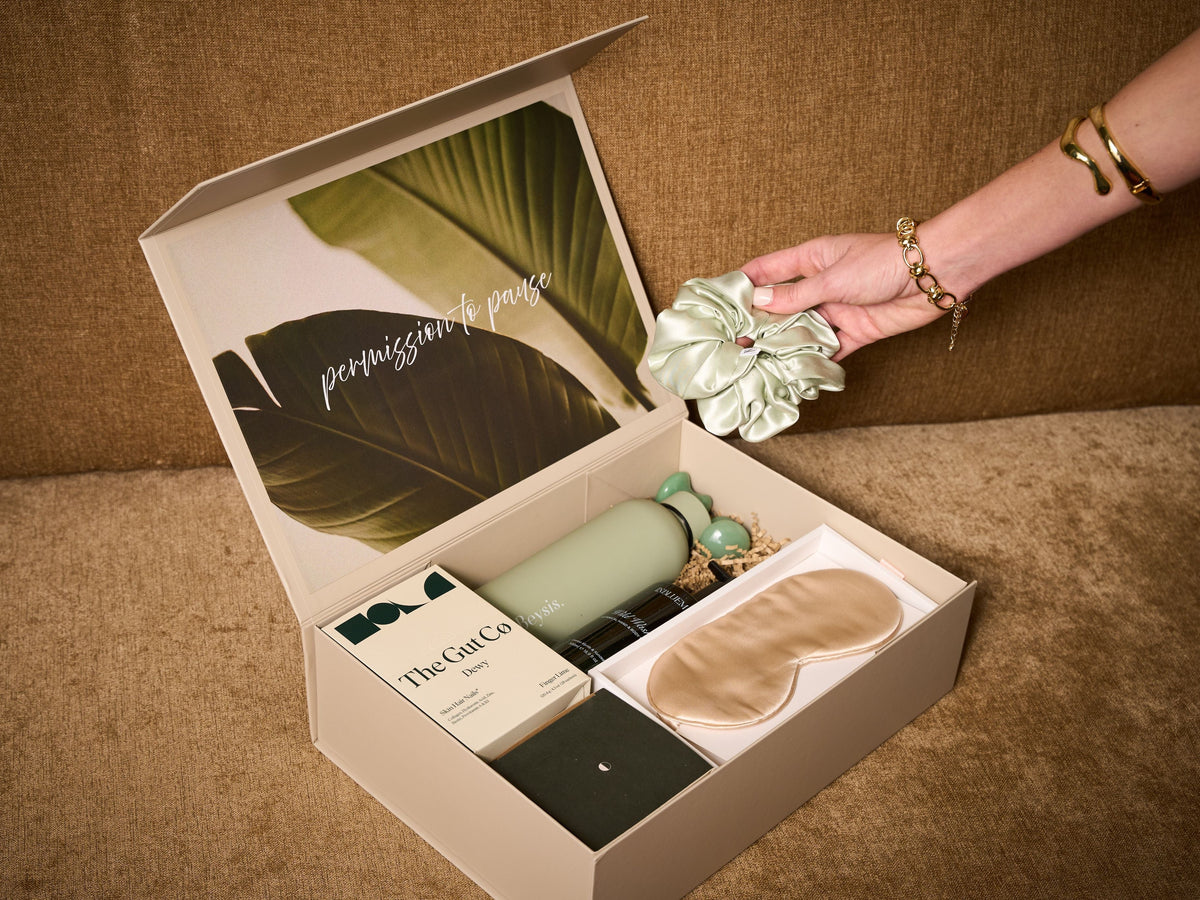
Sensory items engage smell, touch and sight, which is what actually shifts the nervous system into a calmer state. A scented candle, a small bottle of essential oil, and something with a soft texture, like a silk eye mask or a cashmere-blend throw, all belong here.
For mindfulness, add a guided journal, a deck of breathing or meditation cards, or a short book of poetry. These items give the hamper a purpose beyond consumption.
Step 3: Source the Best Australian-Sourced Relaxation Gifts
The best Australian-sourced relaxation gifts come from makers who can tell you where their ingredients and materials originate. That transparency is what separates a genuinely premium hamper from a pretty box of unknowns.
Sourcing well is a filtering exercise. Work through it in this order:
- Start with the maker, not the product. Small-batch producers at farmers' markets, regional gift fairs and maker collectives are usually more forthcoming about provenance than a drop-shipped listing with stock photography.
- Check the label against the claim. If a product says "Australian-made", the maker should be able to point to where the ingredients or materials came from and where the item was assembled. "Australian-owned" is a different claim entirely and says nothing about where the product was made.
- Ask about the packaging. A maker who has thought about their ingredients has usually thought about their packaging too. Recyclable, refillable or compostable packaging is a reasonable proxy for care elsewhere in the product.
- Confirm the returns position before you buy. A clear replacement or returns policy matters more for a gift than for personal use, because you cannot inspect the item on the recipient's behalf.
For buyers concerned about quality and labelling, the ACCC's guidance on product safety and labelling explains what Australian sellers must disclose about the goods they sell, including country-of-origin claims. It is a useful reference when you are vetting a new supplier for the first time.
Where to Find Australian Makers
A few reliable channels, roughly in order of how much vetting they save you:
- Maker markets and regional fairs, you can smell, touch and question the product in person, which is worth more than any online description.
- Specialty wellness and health-food retailers, they have already done a first pass on the brands they stock.
- Direct-from-maker online stores, best for repeat buys once you have found a producer you trust.
- Curated gift services, useful when you want provenance without the sourcing legwork.
Balancing Budget Against Provenance
You do not need every item to be a premium small-batch buy. A common pattern is to anchor the hamper with two or three standout pieces, a quality body oil, a locally made candle, a good bar of soap, and fill the rest with lower-cost items that support the theme, such as a face cloth, a tea blend or a journal. The anchor pieces carry the perceived quality; the supporting items carry the volume.
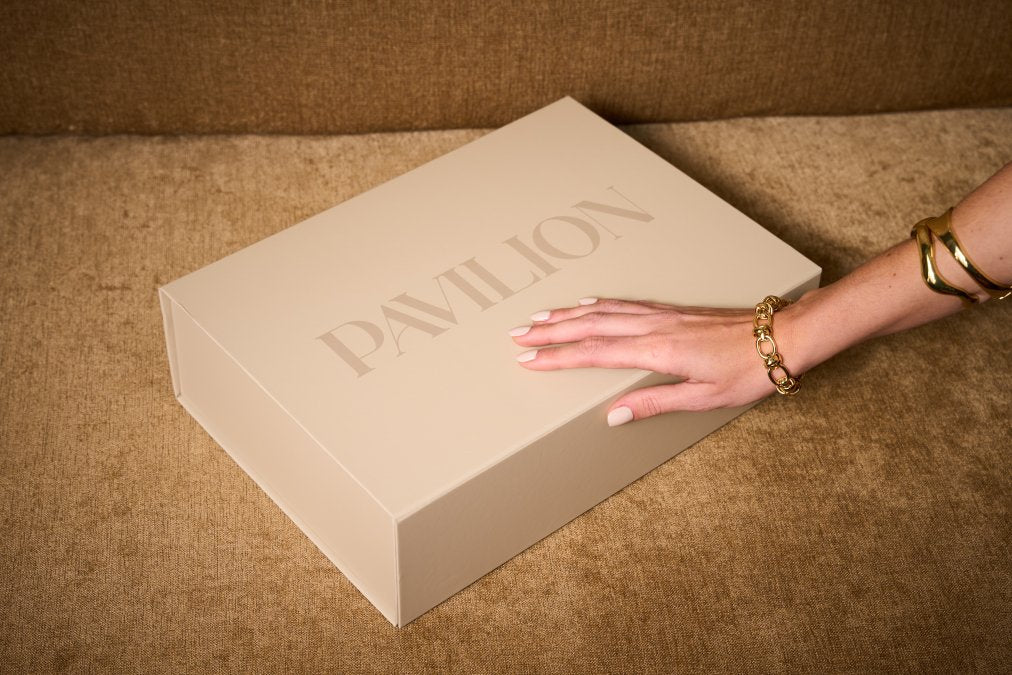
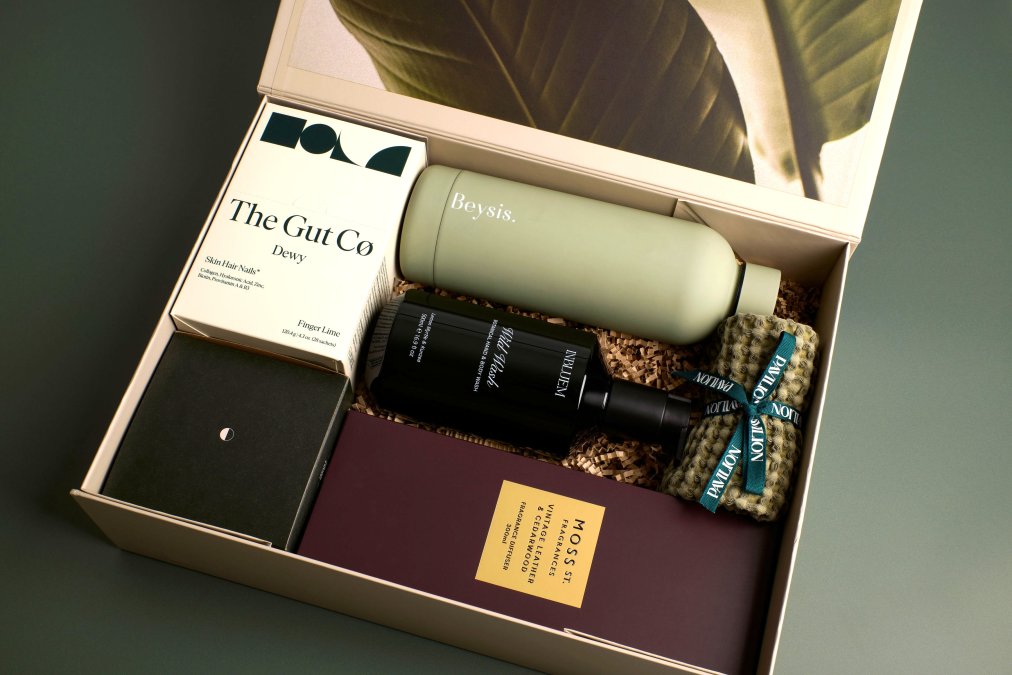
If sourcing and assembling feels like more time than you have, a curated option removes the guesswork. Pavilion Hampers offers curated selections designed around self-care rituals using Australian health, beauty and wellness products, with no alcohol and no refined sugar.
Step 4: Learn How to Style a Gift Hamper
Knowing how to style a gift hamper is mostly about height and balance. Tall items go at the back, flat items at the front, and the tallest, most visually striking piece anchors one corner.
Group items in odd numbers where you can. Three, five or seven pieces read as more natural than even counts. Leave a little breathing room between items rather than packing them shoulder to shoulder.
Arranging for Visual Balance
Visual balance means the hamper looks full from every angle, not just the front. Turn it as you build and check each side. If one corner looks empty, add a small item like a soap or a sachet rather than rearranging everything.
Step 5: Personalise and Package for Delivery
Personalisation is what turns a nice hamper into a thoughtful gift. A handwritten card naming a specific memory, a favourite scent chosen because you know she loves it, or a book by an author she mentioned once, all land harder than any generic add-on. The card is also the only part of the hamper the recipient is guaranteed to keep, so write it as if it is the gift.
Packing So Nothing Breaks in Transit
Most DIY hampers fail in transit, not on the table. The fix is layering, not luck.
- Build in three layers. Filler at the base, then the heaviest and most fragile items seated into that filler, then a top layer of filler and soft goods to stop vertical movement.
- Wrap glass and ceramic individually. Tissue or a small cloth around each piece, then nestle it so it cannot touch another hard item. Two glass items touching is the most common cause of breakage.
- Keep liquids upright and sealed. Tape the cap, then bag the bottle. A slow leak ruins paper filler and any textile in the box.
- Fill every void. If you can shake the hamper and hear movement, it is not packed yet. Add filler until the contents are held firm.
- Choose a rigid outer box. A woven basket is beautiful but flexes; for posting, place the whole hamper inside a snug cardboard outer box with cushioning on all six faces.
Weight, Size and Posting
Postage scales with both weight and cubic size, and bulky filler adds up faster than most people expect. Weigh the finished hamper before you commit to a courier, and measure the outer box, not the basket. If you are near a size or weight threshold, trimming filler or swapping a heavy glass item for a lighter alternative can drop the parcel into a cheaper band.
For anything shipped within Australia, Australia Post's packaging and sending guidelines sets out size, weight and prohibited item rules, including restrictions on flammable liquids and aerosols. Check these before you seal the box, not after, a candle or an essential oil blend can fall under restricted categories depending on how it is classified.
Sustainable Packaging That Still Looks Considered
Eco-friendly wrapping does not have to look plain. A few swaps that hold up visually:
- Replace plastic cellophane with tissue paper or a fabric wrap. A square of linen or cotton can double as part of the gift.
- Use paper tape instead of plastic tape. It seals cleanly and can be recycled with the box.
- Choose reusable containers. A lidded wooden box, a fabric tote or a sturdy basket is packaging the recipient keeps rather than bins.
- Skip the plastic bow. Twine, ribbon or a dried sprig finishes the hamper without adding waste.
- Reuse filler. Wood wool, shredded kraft paper and fabric offcuts can all be reused by the recipient for their own gifting.
Common Mistakes to Avoid When Building a Relaxation Hamper
The most common mistakes in hamper building are structural, not stylistic. They show up in transit or on unboxing, long after the photos were taken.
Mistake |
Why It Hurts |
The Fix |
|---|---|---|
Too many small items |
Looks cluttered, feels cheap |
Four to six quality pieces |
No theme |
Items feel random |
One clear ritual or mood |
Underfilled container |
Items shift and break |
30% more filler than expected |
Scent clashes |
Overwhelming on opening |
Cap at two or three scents |
No personal note |
Feels generic |
Handwritten card naming a memory |
Scent overload is the one people miss most. A candle, a body oil and a linen spray in three different fragrances fight each other the moment the lid comes off. Pick a family, like citrus and bergamot, and stay inside it.
Frequently Asked Questions
What should I include in a relaxation hamper?
A thoughtful relaxation hamper balances sensory items and practical self-care. Include a scented candle, bath salts, essential oils, and a rich moisturiser for a spa-like feel. Add a plush eye mask, herbal tea, and a journal for mindfulness. For a curated experience, consider a mix of indulgent skincare and cozy textures like a soft towel. The goal is to create a cohesive theme that feels personal and promotes stress relief.
How do I arrange a gift hamper to look professional?
Start with a solid hamper base and use filler material like shredded paper or fabric to build height. Place the largest items at the back and arrange smaller products in front, grouping by colour or purpose. Use ribbon to tie elements together and add a personal touch with a handwritten tag. This method creates a visually balanced presentation that looks polished and thoughtful.
What are the best Australian-sourced relaxation gifts?
Look for Australian-made wellness products that use local botanicals, such as essential oils from native plants like eucalyptus or lavender. Choose high-quality skincare brands that prioritise natural ingredients and avoid refined sugar or alcohol. Supporting local makers ensures you are giving a thoughtful gift that is both premium and practical, often with a focus on sustainable packaging.
Can I customise a relaxation hamper for someone with sensitive skin?
Yes, customisation is key to a thoughtful gift. Opt for unscented or hypoallergenic skincare products and choose fragrance-free candles. Select soft, natural fibre towels and avoid items with synthetic dyes or harsh chemicals. Many Australian wellness brands offer sensitive skin ranges, so you can still create a luxurious, indulgent hamper that is safe and enjoyable for the recipient.